

Is That Burning Smell From Your Furnace a Fire Hazard?
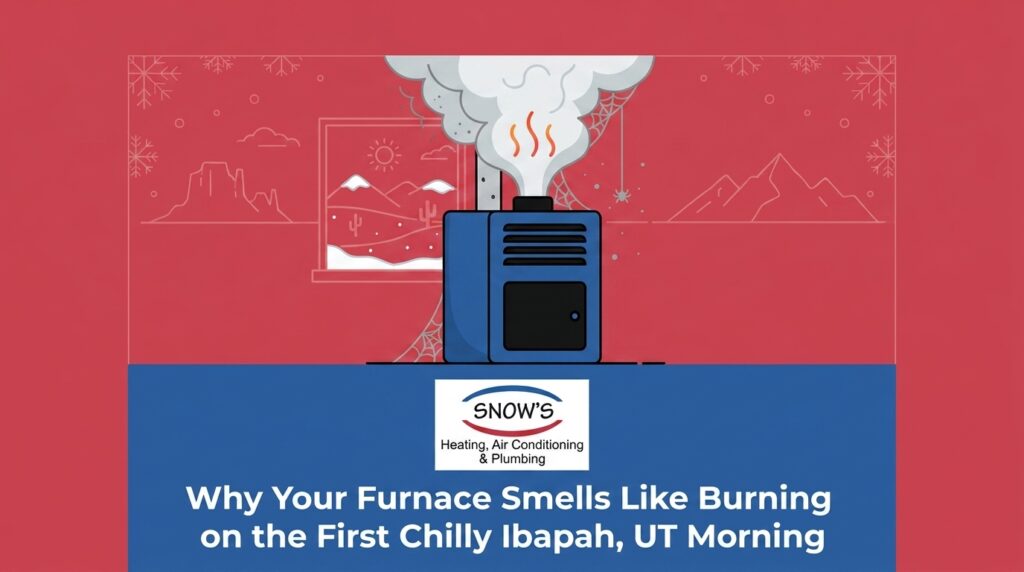
Did you just switch your thermostat to ‘heat’ for the first time this season, only to be met with a concerning burning odor? Why your furnace smells like burning on the first chilly Ibapah, UT morning is a question that causes immediate anxiety for countless homeowners. It is the September early-fall heating transition, the temperature has dropped, and instead of cozy warmth, your vents are blowing air that smells like something is on fire. Your first instinct is likely to panic, shut everything down, and wonder if your house is in danger.
This is a completely valid reaction. Heating equipment operates at high temperatures, and unusual smells should never be ignored. However, you are standing at a critical decision point: you need to determine if that odor is simply harmless seasonal dust burning off, or if it represents a true electrical hazard that requires immediate professional intervention. Knowing the common signs you need heating repair can save you from a dangerous situation, but it can also save you from an unnecessary emergency service call.
The good news is that most early-season furnace smells are entirely harmless and temporary. When your system sits idle for months, it undergoes specific physical changes. However, there are specific, distinct odors that indicate a severe malfunction. By taking a calm, sensory-based approach to evaluating the air coming from your vents, you can quickly diagnose the safety level of your heating system and decide on the appropriate next steps.
The Science Behind the ‘First Turn-On’ Dust Burn-Off
To understand why your furnace produces odors when you first turn it on, you have to look at what happens to your HVAC system during its dormant months. Your furnace does not exist in a vacuum. Even when the heating function is turned off, the internal components are still exposed to the air circulating through your home.
This is especially relevant in our specific climate. The dry, high-desert environment of Ibapah, UT leads to significant airborne dust accumulation over the summer months. Because the air lacks humidity to weigh particles down, microscopic dust, pet dander, and lint are constantly pulled into your ductwork. While your air filter catches a large portion of this, some particles inevitably bypass the filter and settle deep inside the furnace cabinet.
If you find that your system is struggling beyond just a temporary smell, it might be time to look into professional heater repair to ensure everything is operating efficiently. But for the initial startup, here is the mechanical process that creates that alarming scent.
How Summer Dust Accumulates in Your HVAC System
The process of dust accumulation and subsequent burn-off follows a very predictable, mechanical sequence:
- Airflow distribution: Throughout the summer, your air conditioning system uses the same blower motor and ductwork as your furnace. This constant airflow carries microscopic dust and lint into the dormant furnace chamber.
- Settling on components: Because the furnace burners and heat exchanger are not active, they remain cool. This allows a fine layer of dust to coat the large metal surface area of the heat exchanger.
- The flash-burn phase: When you finally switch the thermostat to ‘heat’, the burners ignite. The heat exchanger rapidly heats up to hundreds of degrees. The sudden temperature spike instantly incinerates the coating of settled dust.
- Odor distribution: The blower motor then pushes the warm air—along with the smell of the incinerated dust—through your ductwork and out of the supply vents into your living spaces.
This entire sequence is a standard mechanical process, not a malfunction. The resulting smell is typically earthy, dry, and distinctly similar to a warm hair dryer or burning lint. It is simply your system clearing its throat for the winter season.
Sensory Triage: Identifying Safe vs. Dangerous Furnace Odors
Because you cannot see inside your ductwork, your nose is your best diagnostic tool. Performing a sensory triage allows you to distinguish between a harmless nuisance and a critical situation. The key is contrasting an ozone or melting plastic odor vs. burning lint.
If you detect a smell that falls into the high-risk category, do not wait to see if it improves. Securing timely heater repair is essential to protect your home’s electrical infrastructure and your family’s safety.
The ‘Burning Lint’ Smell (Low Risk)
The most common and least concerning odor is the smell of burning dust or lint. This scent is usually described as earthy, slightly musty, or similar to the smell of a space heater that has just been plugged in. It is a dry smell without any sharp chemical notes. While it can be strong enough to trigger sensitive smoke alarms if the summer dust buildup was particularly heavy, it should begin to fade noticeably as the system continues to run.
The ‘Melting Plastic or Ozone’ Smell (High Risk)
In stark contrast, dangerous odors have a sharp, acrid, or chemical tang. If you smell melting plastic, burning rubber, or a fishy “ozone” scent, you are dealing with an electrical hazard. These odors indicate that wire casings are melting, a blower motor is seizing and overheating, or an electrical short is occurring on the control board. A hot metallic smell can also indicate that the system is severely overheating due to restricted airflow.
| Type of Smell | Likely Cause | Risk Level | Required Action |
|---|---|---|---|
| Earthy, dry dust, warm hair dryer | Normal seasonal dust burn-off on the heat exchanger. | Low | Let the system run; monitor for 30-60 minutes. |
| Sharp, fishy, ozone, electrical spark | Electrical arcing, failing control board, or short circuit. | High | Shut off system immediately at the thermostat. |
| Melting plastic, burning rubber | Overheating wires, melting insulation, or failing motor. | High | Shut off system immediately at the thermostat. |
| Hot metal, overheated iron | Severely clogged air filter causing the heat exchanger to overheat. | Moderate | Turn off system, check and replace air filter. |

How Long Should the Seasonal Burning Smell Last?
If you have identified the odor as normal burning dust, the next question is how long you should tolerate it. Setting clear timeframes prevents you from ignoring a problem that fails to resolve itself. The standard window for normal dust burn-off during the September early-fall heating transition is 30 to 60 minutes.
During this initial cycle, the smell will likely be strongest in the first ten minutes and then gradually taper off. To help clear the air, you can open a few windows to ventilate your home. This allows the incinerated particulate matter to escape rather than continuously recirculating through your return vents.
If the smell persists beyond a full hour of continuous running, or if the odor actually grows stronger and more pungent, you should turn the system off. At that point, the issue has likely escalated beyond simple surface dust. As trusted local HVAC experts, we prioritize homeowner education and peace of mind. We want you to know when it is safe to wait, but we are also ready to quickly diagnose whether it is harmless dust or a real issue without aggressive sales tactics.
If you remain unsure, having a professional evaluate the system is always a valid response. One local homeowner reached out during the fall when they suspected their heater was not working correctly due to an unusual odor. A technician checked the heater and confirmed it was working great, assuring the customer their system was fine and simply going through its normal seasonal cycle. It is always better to have that professional reassurance than to gamble with your home’s safety.
When to Shut Down Your System Immediately
While patience is the right approach for dust smells, immediate action is required for chemical or electrical odors. The National Fire Protection Association (NFPA) consistently cites heating equipment as a leading cause of home fires in the United States. This underscores the absolute necessity of taking unusual electrical or plastic odors seriously.
If you detect an ozone or melting plastic odor vs. burning lint, you must halt the operation of the equipment. Continuing to run a furnace that is actively melting its own wiring can lead to catastrophic damage to the unit and severe danger to your property. Knowing how to safely fix a furnace that won’t turn on starts with knowing when to shut it down to prevent further damage.
Emergency Shutdown Protocol
If you identify a high-risk smell, follow these steps immediately to secure your system:
- Switch off the thermostat: Go to your central thermostat and switch the system mode from ‘Heat’ to ‘Off’. This stops the call for heat and should shut down the burners and the blower motor.
- Check the electrical panel: Go to your home’s main breaker box. Look for the breaker labeled for your furnace or HVAC system. If the breaker has tripped (moved to the middle or ‘off’ position), this confirms a severe electrical fault. Do not attempt to reset it.
- Maintain a safe distance: Do not attempt to open the furnace cabinet, remove access panels, or touch any exposed wiring. Internal components may be dangerously hot or electrically charged.
- Evaluate the environment: If the smell of smoke becomes overwhelming, or if you see visible smoke coming from the vents or the furnace cabinet itself, evacuate the home immediately and call emergency services.
- Call for professional help: Leave the system completely off until a licensed professional can inspect the wiring, the blower motor, and the heat exchanger.
Safe Troubleshooting Steps Before Calling a Technician
If the smell is closer to hot metal or severe dust, there are a few safe, non-mechanical checks you can perform yourself. Sometimes, restricted airflow causes the furnace to work harder than necessary, leading to overheating and pronounced odors during the September early-fall heating transition. You can resolve basic airflow problems without opening the equipment.
Before you dive into deeper troubleshooting furnace problems, run through this simple homeowner checklist:
- Check the HVAC air filter: This is the most common culprit for an overheating system. A clogged, dirty filter severely restricts the amount of cool air flowing over the heat exchanger. Without that airflow, the heat exchanger gets too hot, producing a hot metal smell and potentially causing the system to short-cycle (turn on and off rapidly). Replace the filter if it is visibly coated in gray dust or debris.
- Verify all supply vents are open: Walk through every room in your house and ensure the supply registers (where the air blows out) are fully open. Closing vents in unused rooms actually increases static pressure in the ductwork, making the blower motor work harder and run hotter.
- Clear return vent blockages: Locate your large return vents (where air is pulled back into the system). Ensure they are not blocked by heavy furniture, thick rugs, or heavy drapes. The system needs to breathe freely to regulate its internal temperature.
- Inspect floor registers for debris: Especially in homes with children or pets, objects can easily fall into floor vents over the summer. A plastic toy, a buildup of pet hair, or dropped food wrappers resting on the ductwork just below the register can begin to heat up and smell when the warm air hits them.
The golden rule of troubleshooting: You should only inspect the exterior airflow components. Any internal mechanical, gas, or electrical troubleshooting must be left to a licensed professional to ensure your safety and maintain your equipment warranty.
Frequently Asked Questions About Furnace Odors
When dealing with a strange smell coming from your vents in Ibapah, UT, you likely have immediate, specific questions. Here are clear, authoritative answers to the most common concerns homeowners have during the first heating cycle of the season.
How long is it normal for a furnace to smell like burning?
It is typically normal for a furnace to smell like burning dust for 30 to 60 minutes during the very first cycle of the season. This window allows the system enough time to reach its maximum operating temperature and completely incinerate the microscopic dust that settled on the heat exchanger over the summer. If the smell persists beyond an hour, or if it returns on subsequent days, it warrants further investigation.
Can a furnace catch on fire from dust?
While rare, extreme neglect can cause severe overheating; however, standard seasonal dust simply burns off harmlessly. For a fire to occur purely from dust, the buildup would have to be incredibly dense, usually the result of operating the system without an air filter for an extended period. Regular filter changes and annual maintenance easily prevent this level of dangerous accumulation.
What does an electrical fire smell like in a furnace?
An electrical fire in a furnace smells like melting plastic, burning rubber, or a sharp, fishy ozone scent. This odor is distinctly acrid and chemical, completely unlike the dry, earthy smell of burning lint. If you detect this sharp, synthetic odor, it usually means wire casings are melting or a motor is failing, and the system must be shut down instantly.
Should I turn off my heater if it smells like burning?
If it smells like dust, let it run for an hour. If it smells like plastic, ozone, or electrical burning, turn it off immediately. You must base your reaction on the specific type of odor. Shutting down the system for a normal dust burn-off will just delay the inevitable, as the dust will still be there the next time you try to heat your home. However, ignoring a chemical smell can lead to severe damage.
Why does my new furnace smell like burning when turned on?
New furnaces often have a harmless oil coating from the manufacturing process that burns off during the first few uses. This protective coating prevents the metal components from rusting while the unit is stored in a warehouse or during shipping. The burn-off process for a brand-new unit can sometimes smell slightly more metallic or oily than standard dust, but it should still dissipate within the first few hours of total operation.
Get Professional Peace of Mind for Your Heating System
Navigating why your furnace smells like burning on the first chilly Ibapah morning doesn’t have to be a source of stress. The short answer is that a dry, dusty odor fading within an hour is a normal part of the season turning. However, if you are ever faced with an ozone or melting plastic odor vs. burning lint, or if a dusty smell simply refuses to go away, you should never gamble with your home’s safety. Trusting your senses and knowing when to call for an expert evaluation ensures your system is safe, efficient, and ready to keep you comfortable all winter long.