



How to Choose the Right AC Unit Sizing
Room size, insulation quality, and climate determine the BTU requirements for proper cooling capacity. As homeowners in Ferron, UT, we ask our customers to work with us on accurate load calculations, energy-efficiency ratings, and unit sizing. Our professional assessments prevent oversized or undersized systems, ensuring optimal comfort and lower utility costs year-round. Correct sizing determines performance: an oversized unit cools air faster than it removes humidity, leaving rooms damp. An undersized one struggles to keep up. We recommend calculating square footage against an ENERGY STAR BTU chart, then reaching out to our team for expert installation guidance. Choosing the right cooling system starts with matching capacity to room size: window units suit single rooms affordably, portable units work where windows can’t support a unit, and mini-splits cool large spaces with efficiency and quietness close to central air. We help homeowners weigh these options against budget, space, and comfort needs before installation.
Key Takeaways
- Window air conditioners provide the least expensive cooling option for homes without central AC systems.
- Properly sized units reduce humidity and temperature while preventing excess energy consumption and waste.
- Portable air conditioners offer convenient cooling solutions when windows cannot support traditional window-mounted units.
- Mini-split systems cool large spaces with high efficiency, though installation costs exceed other air conditioner types.
What Will You Accomplish In This Guide?
This guide gives homeowners and renters a clear framework for matching cooling equipment to their space. We walk through window units, portable systems, ductless mini-splits, and central air, so the decision feels straightforward rather than overwhelming. Getting ac unit sizing right from the start protects comfort and prevents wasted spending on equipment that never performs as promised. Without central AC, several paths remain open. Window air conditioners rank among the most affordable ways to cool a single room. Portable units and mini-splits offer flexibility for spaces that can’t accommodate a traditional window install. Mini-splits carry a higher upfront installation investment, but they reward homeowners with efficiency and quiet operation that rivals central air, especially in larger rooms or multi-zone homes.
How Do I Know Which Cooling Option Fits My Home?
The right choice depends on room size, budget, and how much noise or installation work feels acceptable. We recommend weighing these factors before buying:
- Room or home square footage to determine air conditioner capacity needs
- Installation complexity, since window units go in fast but mini-splits require professional setup
- Long-term operating costs, where efficiency often offsets a higher initial investment
- Noise tolerance, since central-air-style systems run quieter than most window models
Does Snow’s Heating & Air Conditioning, Inc. Handle More Than Just AC?
Yes. We support air conditioning, heating, indoor air quality, heat pump, and ductless services for homeowners in Ferron, UT. We serve residential, commercial, and new construction clients, giving homeowners a single trusted resource as their comfort needs evolve. Selecting the right ac size now sets the foundation for reliable performance for years to come, and we stand ready to guide that decision every step of the way.

What Should You Know Before Shopping?
Getting ac unit sizing right matters more than any brand name or feature list. A unit that’s too small struggles to cool a room. An oversized unit chills the air so fast it fails to pull out enough moisture, leaving the space damp and clammy. We treat proper sizing as the foundation of every recommendation we make, because comfort and efficiency both depend on it. Cooling costs deserve attention too. A meaningful share of a typical household’s annual utility bill goes toward cooling alone. Choosing an energy-efficient model with the correct air conditioner capacity protects your budget as much as your comfort.
How do I know what size air conditioner I need?
Start by measuring the square footage of the room or home you plan to cool. This single measurement is the foundation for finding the right ac size. Capacity ratings are built around square footage estimates, and skipping this step is the most common reason homeowners end up with a unit that underperforms or overcools. Before shopping, we recommend working through these steps in order:
- Measure the square footage of each room or the whole home you want cooled.
- Note ceiling height and sun exposure, since both affect cooling load.
- Compare your measurements against manufacturer sizing charts.
- Decide between window, portable, ductless, or central options based on your layout.
- Factor in efficiency ratings alongside capacity to manage long-term utility costs.
Does our service area matter when planning a purchase?
Yes — local climate and home construction influence sizing decisions. We’re proud to serve homeowners in Ferron, UT, and our familiarity with the area’s homes helps us guide accurate, lasting sizing decisions before installation day.
Step One: How Do You Measure Your Space?
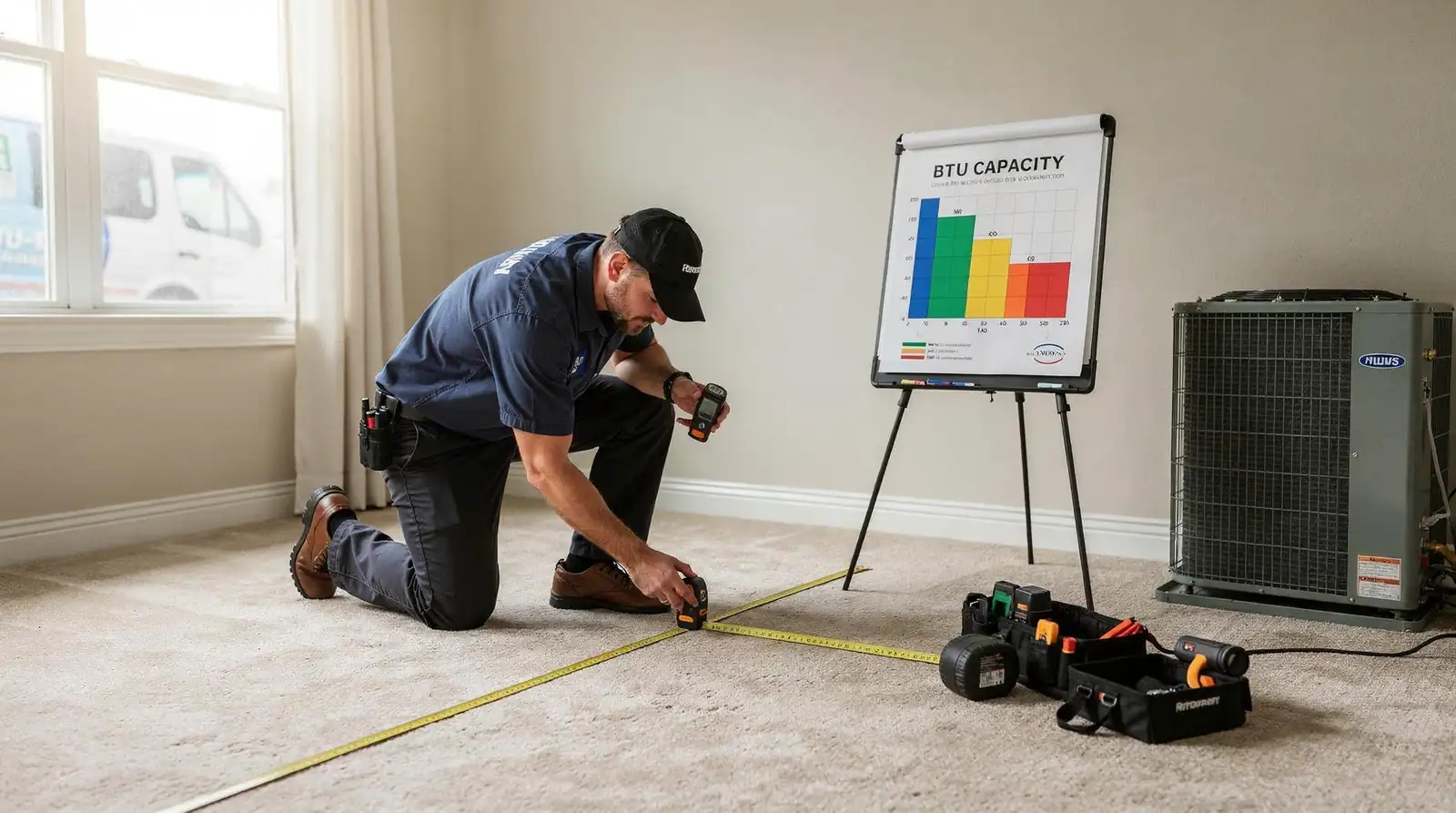
Square footage tells us exactly how much cooling power a room needs. We start every consultation by measuring length and width, then multiplying the two numbers together. Skip this step, and homeowners risk buying a unit that either struggles to keep up or short-cycles and leaves the room feeling damp. We recommend measuring each room separately if multiple spaces need cooling. ac unit sizing depends on the specific square footage of the area, not the whole house at once. Once we have that number, we move to matching it against air conditioner capacity ratings.
How Do BTUs Relate to Room Size?
Cooling output gets measured in British Thermal Units, or BTUs. A chart, like the one published by ENERGY STAR, lines up square footage with the BTU rating needed to cool that space effectively. We use these charts with every customer to confirm the right AC size before recommending a specific model. Here’s how we walk through the process with homeowners:
- Measure the length and width of the room in feet.
- Multiply those two figures to get total square footage.
- Match that square footage against a BTU chart to find the appropriate capacity range.
- Note any rooms with unusual ceiling heights, sun exposure, or open layouts that may need adjustment.
- Confirm whether a single-room unit or a whole-space solution fits better.
Getting this math right matters more than most homeowners realize. An undersized unit runs constantly and never quite cools the room. An oversized one cools too fast, which means it removes cold air before it removes humidity, leaving the space clammy rather than comfortable. We size every recommendation, including our ductless mini-split options, around these measurements first, so comfort and efficiency work together instead of against each other.
Step Two: How Do Humidity And Climate Affect Size?
Humidity levels and regional climate change the math behind ac unit sizing just as much as square footage does. We remind every customer that air conditioners perform two jobs at once: pulling moisture out of the air and dropping the temperature. Get this wrong, and comfort suffers. An oversized unit chills a room quickly, but it never runs long enough to strip out humidity properly. The result is a space that feels cool yet damp and clammy, which defeats the purpose of running the system at all.
Does Climate Change What Size AC I Need?
Yes. Homes in hot, humid regions often need a unit with greater air conditioner capacity than a similarly sized home in a dry climate. We factor local humidity patterns into every recommendation we make, since a unit that works fine in a dry mountain town won’t necessarily perform well in a sticky lowland summer.
Why Does Bigger Not Always Mean Better?
Bigger equipment sounds like the safer bet, but oversizing backfires. It short-cycles, wastes energy, and leaves indoor air feeling swampy rather than crisp. When we help homeowners find the right ac size, we weigh a few climate-driven factors together:
- Average summer humidity in the local area
- How many hours of direct sun the home receives
- Whether the space traps heat due to layout or insulation
- Regional temperature extremes during peak season
We also pair proper sizing with our indoor air quality services, since humidity control and air filtration work hand in hand. A correctly sized system, combined with the right air quality equipment, keeps homes comfortable without the sticky, overworked feeling that oversized units create.
Step Three: Which Unit Type Fits Your Home?
Four main equipment types compete for your attention once ac unit sizing questions get answered: window units, portable systems, ductless mini-splits, and central air. We guide homeowners and renters through this decision every day, matching household layout and budget to the right equipment category. Skip this step, and you risk paying for cooling power a room simply doesn’t need, or worse, installing a unit that can’t keep up with the heat.
Which AC type costs the least upfront?
Window units remain one of the least expensive ways to cool a single room. We recommend them for renters or homeowners who only need to cool a bedroom or living area without a major investment. If a window frame can’t structurally support a mounted unit, a portable air conditioner offers the same convenience without that constraint.
Do we need central air, or is there a better fit?
Not every home requires a full central system to stay comfortable. A window air conditioner can serve as a simple, easy-to-install alternative when whole-house cooling isn’t the goal. For homes that need broader coverage without traditional ductwork, we also install heat pumps and ductless mini-split systems, both of which deliver flexible, room-by-room comfort. Here’s how the main options generally compare:
Matching air conditioner capacity to your actual layout matters more than picking the trendiest option. We serve residential, commercial, and new construction customers in Ferron, UT, and we walk each customer through these trade-offs before recommending equipment. Getting the right ac size for your specific unit type protects both comfort and long-term performance, and we always start with your home’s layout, not a one-size-fits-all recommendation.
Step Four: What Operating Features Matter Most?
Operating features determine how well an air conditioner fits daily routines, not just how it handles air conditioner capacity. We walk every customer through the same checklist before recommending a model, because comfort depends on controls as much as raw cooling power. Most window units we install offer multiple operating modes. Cooling mode lowers both temperature and humidity in the room. Fan-only mode simply circulates existing air without engaging the compressor. That distinction matters for the electric bill: fan-only mode draws less energy than full cooling mode, making it a smart choice for mild days when a room needs air movement rather than a temperature drop.
Should we choose preset cooling levels or a set-temperature mode?
We recommend set-temperature models for households that want consistent comfort without manual adjustments. These units rely on a built-in sensor to monitor room temperature and cycle the compressor on and off, maintaining the target reading automatically. Preset-level models, by contrast, give simpler control for anyone who prefers a manual approach.
Which extra features are worth paying attention to?
We advise clients to rank features by daily need rather than by novelty. A programmable thermostat suits variable schedules, while an air purifier benefits households managing allergies or indoor pollutants. Before finalizing any purchase, we walk customers through this feature checklist:
- Confirm the unit offers both cooling and fan-only modes for flexible energy use.
- Decide between preset cooling levels and automatic sensor-based temperature maintenance.
- Identify which added features, such as programmable thermostats or air purifiers, matter most for the household.
- Match those features to the right AC size already determined through proper AC unit sizing.
Skipping this step often leads to buyer’s remorse, even when the unit itself is correctly sized.
Step Five: How Do You Budget For Installation?
Budgeting starts with quality, not just the sticker on the unit itself. A higher-quality air conditioner often demands a larger upfront investment, and we always factor professional installation into that number. Skipping this step leads to mismatched systems, wasted energy, and repeat service calls down the road. We recommend building a budget around three factors: equipment quality, correct air conditioner capacity for the space, and the labor required for a clean installation. An undersized or oversized system strains itself trying to compensate, which drives up energy use and shortens equipment life. Getting the right AC size from the start protects the investment homeowners make in both comfort and monthly utility costs.
Why does energy efficiency matter for my budget?
Air conditioners consume substantial energy over their lifespan, and the model chosen affects long-term operating costs far more than the initial purchase. We guide homeowners toward efficient equipment that matches their home’s actual cooling load. This approach reduces strain on the system and keeps monthly bills predictable.
Should I include installation in my planning?
Yes. Professional installation ensures proper AC unit sizing, correct refrigerant charge, and safe electrical connections. Skipping this step often costs homeowners more later through inefficient operation or premature breakdowns. We’re proud to provide installation services for homeowners throughout Ferron, UT. Every customer we serve benefits from the same standard of care: we walk homeowners through equipment options, explain how sizing affects comfort, and provide a clear installation plan before any work begins. That transparency helps families budget confidently and avoid costly surprises once the system is running.
What Mistakes Should You Avoid After Buying?
Two errors cause most post-purchase regret: overlooking BTU chart guidance and underestimating how humidity affects comfort. We see both mistakes often, and each one undermines an otherwise sound purchase. Avoiding them protects both comfort and long-term performance. AC unit sizing guided by an ENERGY STAR BTU chart prevents a mismatch between unit and room. Many buyers skip this step, assuming bigger always means better cooling. That assumption backfires quickly.
Why does an oversized air conditioner still feel uncomfortable?
An oversized unit cools the air faster than it can pull moisture out of it. The result is a cold room that still feels damp and clammy, even though the thermostat says the temperature is right. Choosing the right AC size for the square footage avoids this outcome entirely. Once the unit is home, we recommend these steps:
- Confirm the room’s square footage against the manufacturer’s BTU chart before installation.
- Check that the unit’s stated air conditioner capacity matches both cooling and humidity-removal needs.
- Schedule a professional consultation if room shape, ceiling height, or sun exposure complicates sizing.
- Avoid placing the unit where furniture or curtains block airflow.
Should homeowners install a new unit themselves or call a professional?
Self-installation works for simple window units, but ductless and central systems benefit from trained hands. Homeowners who previously struggled with other home service providers often notice the difference immediately once they work with our courteous, communicative crew. We encourage anyone weighing these decisions to schedule service with us directly, so sizing, placement, and installation are handled correctly the first time.
Ready to Get the Right Size AC for Your Home?
Choosing the correct cooling system doesn’t have to be complicated when you have the right guidance behind you. We’re here to help homeowners and renters in Ferron, UT, work through room measurements, humidity concerns, and equipment options until the choice feels obvious rather than overwhelming. As Snow’s Heating & Air Conditioning, Inc., we invite you to request a quote so we can walk through your home’s specific needs together and recommend the right size, right type, and right installation plan from day one.
FAQ
What happens if I choose an air conditioner that’s too big for my room?
An oversized unit cools air faster than it removes humidity, leaving rooms damp and clammy instead of comfortable.
Which type of air conditioner costs the least for cooling a single room?
Window air conditioners rank as the most affordable option for cooling one room in homes without central AC systems.
Who can help me determine the right AC size for my home?
We help homeowners in Ferron, UT, weigh options against budget, space, and comfort needs, and we offer expert installation guidance every step of the way.